

Anyone working near chemical production lines or research labs has probably bumped into 2-Ethylhexanol, either as a feedstock or a substance with a distinct, somewhat fruity odor wafting through factory air. The wider story traces back nearly a century. Invented during an era when industrial chemistry seemed to hold the answer to every modern need, 2-Ethylhexanol grew popular as a base for producing plasticizers. Early 20th-century breakthroughs in hydrogenation and organic synthesis made large-scale production possible, and the discovery that 2-Ethylhexanol could morph into dozens of valuable downstream products set industrial gears in motion. Decades later, it still fills roles nobody saw coming, touching everything from vinyl flooring to coatings for modern smartphones.
No, it doesn’t get the same spotlight as headline-grabbing chemicals, but 2-Ethylhexanol holds the respect of chemists for a reason. This eight-carbon alcohol carries enough flexibility to serve as a core ingredient in plasticizer manufacturing, surfactant synthesis, even as an intermediate in producing lubricants or agrochemicals. The industry leans heavily on it for making phthalate and non-phthalate plasticizers, which in turn soften and stabilize polyvinyl chloride (PVC) products in massive quantities. The grip of its applications stretches further—sometimes adding slip to inks and coatings, other times popping up in flavors and fragrances in tightly regulated doses. It’s an unsung workhorse meeting the needs of manufacturers on virtually every continent.
The chemical structure of 2-Ethylhexanol—a branched C8 alcohol—gives it some standout characteristics. It pours as a colorless liquid, viscous but not syrupy, with a faintly sweet scent noticeable during lab work. The branching helps reduce its water solubility, so in many settings, workers handle it as a hydrophobic component. With a boiling point around 184°C and flash point near 75°C, it settles into an easy zone for storage and transport. Its lower volatility rewards storage teams with a safer profile compared to more hazardous alcohols, but it still demands tight handling and proper ventilation due to its irritating vapor. Reactivity stays moderate in most conditions, but its hydroxyl group offers chemists a foothold for creating esters—one key route to countless new molecules.
Looking beyond data sheets and spec tables, labs and factories encounter this chemical in bulk shipments. Industry-standard purity levels hover close to 99%, since process residues can muck up downstream reactions. Whether arriving in steel drums or massive tankers, labeling sticks to strict international norms, flagging the liquid’s flammable and irritant status and warning handlers about eye or skin contact. I’ve had my share of experience wrangling those tight-sealing containers and can tell you, the scent lingers hours after opening. Chemical suppliers in the US, Europe, and Asia assign clear hazard icons—health, environment, fire risk—matching what regulators demand, so missteps become less likely, but not unheard of.
Most producers lean heavily on two steps: aldol condensation, followed by hydrogenation. It starts with simple propylene, which feeds into a butyraldehyde intermediate—thanks to oxo synthesis. That aldehyde then meets itself under base catalysis, delivering 2-ethylhexenal, which undergoes hydrogenation, dropping the double bond and giving the final alcohol. In practice, orchestrating steady yields takes constant attention to reactor temperature, pressure, and catalyst regeneration schedules. Walk through a modern facility, and you’ll see how equipment design echoes decades of trial-and-error, squeeze for every percentage point of efficiency. Waste minimization and heat recapture efforts now thread through most operations, pushed by both economics and tighter environmental rules.
Chemists never leave a useful molecule untouched for long. Through esterification, 2-Ethylhexanol transforms into a backbone for plasticizers—think DEHP or DINP—without which soft PVC products wouldn’t exist. Reactivity with acids spawns solvents, surfactants, even some specialty lubricants. Tinker with structure by swapping out functional groups and you’ll unlock new materials for coatings or custom additives in everything from automotive interiors to agricultural films. Over years in labs and pilot plants, I’ve seen that even minor tweaks in processing conditions—say, catalyst choice or reaction time—lead to widely different performance in end-use products. This adaptability keeps 2-Ethylhexanol’s influence quietly expanding.
Depending who you ask, this chemical picks up several nicknames. Chemists might call it 2-EH or 2-EHOH, reflecting shorthand for 2-Ethyl-1-hexanol. Labels across Europe sometimes carry Ethylhexyl alcohol. Buyers less familiar with the molecule might recognize it by reference to the plasticizers derived from it—DOP, DOTP, DINP, and so on—creating confusion for newcomers. Over the years, this variety in names has fed misunderstandings in purchase orders or lab literature searches. Clear communication up and down the supply chain, matched by accurate labeling, saves companies from costly mix-ups and inefficient rework.
Despite its moderate profile, 2-Ethylhexanol poses enough health and fire risks to earn respect in handling. Fumes irritate eyes and mucous membranes. Liquid contact reddens skin and may cause long-term sensitization for some workers. In my years on the floor, mandatory gloves, goggles, and proper lab coats never felt burdensome given the alternative: days of discomfort or doctor visits. Safety protocols line up closely with GHS guidance—well-marked storage, spill containment, eyewash stations placed where spills could happen. Facility managers pay careful attention to secure ventilation and vapor monitoring, because carelessness in a warm, stuffy lab can bring sudden headaches or worse. Fire risk doesn’t loom as large as for lighter alcohols, but open flames or sparks remain off-limits near storage—something every experienced plant hand learns to check twice.
2-Ethylhexanol finds its fingerprints almost everywhere. Nearly all flexible vinyl flooring and wall coverings use its plasticizer derivatives, giving just the right combination of softness, toughness, and clarity. In paints, lacquers, and coatings, its esters act as coalescing agents, smoothing out film formation and improving spread. Automotive manufacturers rely on it for synthetic lubricants and fuel additives, trying to eke out performance and warranty-friendly lifespans. Even outside heavy industry, 2-Ethylhexanol and its derivatives creep into fragrances, sometimes adding fruity notes or supporting complex aromas. Agricultural use shows up too—formulating certain herbicides or delivering adjuvants that help sprays stick. Each application leans on a slightly different set of properties, but without 2-Ethylhexanol, the material landscape of daily life would feel far less resilient and much less flexible.
Continual improvement defines the chemical industry. Recent research homes in on phasing out phthalate-based plasticizers because of health and regulatory worries. Scientists experiment with greener synthesis routes, sometimes starting from bio-based feedstocks—ideas that seemed pie-in-the-sky in my early days now draw direct investment and pilot lines. Work in catalysis aims to cut waste or lower energy inputs. Life cycle assessment becomes common, demanding sustainability from cradle to grave. Material engineers push to expand end-use performance too. Multifunctional additives tailor surface properties for next-generation electronics or improve durability under extreme conditions. Synthetic biology, once a fringe curiosity, now whispers of engineered microbes transforming simple sugars into 2-Ethylhexanol—changing both the carbon footprint and supply chain. Each round of innovation stretches the legacy and reach of a once-humble molecule.
2-Ethylhexanol rarely grabs worrisome headlines, yet researchers continue tracking its fate in humans and across ecosystems. Rodent studies highlight low acute toxicity but point to long-term effects—especially as breakdown products or metabolites accumulate. Regulatory agencies in Europe, Asia, and North America track occupational exposure levels and environmental thresholds, leaning on independent lab studies but also frequent industry-supplied data. In practice, most risks materialize only with chronic overexposure or lack of basic PPE. Environmental monitoring finds the substance mainly in effluents where plasticizer plants operate, prompting stricter limits and better scrubbing systems. The latest toxicology models ask tough questions about mixtures and micro-dosing, reflecting a world where chemicals never exist in isolation. Honest risk assessment must keep up with innovations in both detection and remediation—anything less leaves blind spots in health and regulatory planning.
For anyone watching global chemical trends, it’s clear 2-Ethylhexanol stands at a crossroads. Fossil fuel–based routes keep one foot in legacy production, while pressure mounts to source raw materials more sustainably. Circular economy models urge companies to reclaim and recycle plasticizers instead of pushing for single-use. Consumer health debates drive reformulations, sometimes at the pace of market panic, but more often through slow, thoughtful substitution and testing. The future doesn’t promise a straight path; evolving regulations, public pressure, and tough raw material economics can tilt fortunes in unexpected directions. In all this, labs and factories that once followed old recipes now experiment daily, seeking to balance performance, cost, and health for workers and end-users alike. As materials science and policy expand in scope, the next generation of chemical building blocks stands ready—not as a panacea, but as another step in blending the legacy of old-fashioned chemistry with the hope of smarter, safer industrial progress.
Most people have never heard of 2-ethylhexanol, but its fingerprints show up almost everywhere. This colorless liquid rarely gets attention outside of chemical circles, yet it keeps so many corners of modern industry running. Here’s why any of us who appreciate flexible plastics, smooth paint finishes, or fuels that don’t clog engines should care about 2-ethylhexanol.
Walk through a supermarket, and just about every plastic wrap, squeeze bottle, or soft vinyl flooring owes something to this odd-sounding alcohol. Why? It gets used to make a chemical called dioctyl phthalate. Manufacturers blend dioctyl phthalate into PVC to make it soft—nobody wants crunchy shower curtains or stiff wire insulation. Globally, a huge portion of 2-ethylhexanol ends up in this role. We forget how important flexibility in plastics really is until someone hands us a brittle plastic bag that rips right open.
Anyone who’s tried to paint a fence with lumpy, streaky paint understands the value of a smooth coat. 2-ethylhexanol steps up as a solvent in the paint and coatings world. It helps dissolve the other ingredients, making sure they blend well and spread evenly. As a result, surfaces dry without bubbles, craters, or tacky spots. In places where high humidity or stark temperature swings cause problems, picking the right solvent keeps the finish looking good for much longer. People underestimate how big a role something we never see can play in the durability and look of finishes in our homes and cars.
Fuel systems can easily gum up over time, sticking valves or clogging injectors. 2-ethylhexanol steps in here, too. Mixed with other chemicals, it helps make diesel and gasoline that flows better, burns cleaner, and leaves fewer deposits behind. In colder climates, diesel thickens and turns sluggish. Additives based on this compound keep fuel from turning into sludge, especially for truckers or farmers who don’t have the luxury of heated garages. The ripple effect hits everyone, with fewer breakdowns and lower maintenance costs at every level.
Personal care products, detergents, and some adhesives tap into the versatility of 2-ethylhexanol. When combined with common acids, manufacturers create surfactants— these help oil and water mix, so soaps and shampoos can actually get things clean. Everyone who’s battled greasy dishes or tried to wash motor oil off their hands has relied on surfactants just like these. While the amount in any single shampoo bottle is tiny, total use adds up fast thanks to the scale of consumer goods worldwide.
Often, the talk around chemicals focuses only on risks or big industrial plants, but something like 2-ethylhexanol quietly supports everyday convenience and safety. There’s a side to these compounds that’s easy to miss but impossible to replace without trade-offs. If trends shift toward greener chemistry—and they are—manufacturers will have to hunt for alternatives that cover the same wide range of needs, from plastic wrap flexibility to long-lasting paint jobs. That’s no simple task.
People notice quickly whenever a replacement falls short. Until science unlocks new answers, 2-ethylhexanol remains as much a part of daily life as running water or electricity—easily overlooked but hard to live without.
Walking through hardware stores, most folks don’t realize how many day-to-day items contain complex chemicals. 2-Ethylhexanol often shows up in the fine print—found in plasticizers, paint, cleaning products, and sometimes even in cosmetics. It’s colorless, oily, has a faint sweet odor, and plays a big part in giving plastics their bend and flexibility. Everyday exposure happens quietly and routinely, which sparks questions about safety.
Breathing in strong fumes from new vinyl flooring, or working around paints and solvents, brings people closer to 2-Ethylhexanol. Researchers have examined its impact on health, especially since it can irritate eyes, skin, and lungs. Short bursts of high exposure—think working in poorly ventilated areas—often lead to headaches, dizziness, or nausea. Wash a spill off your hands fast enough, and the skin stings or reddens.
Longer-term concerns spark even more debate. Some animal studies uncovered liver and lung changes, sometimes at levels far above what’s seen in household or workspace air. So far, regulated levels keep exposure down. Major health authorities like the US Environmental Protection Agency and World Health Organization don’t label 2-Ethylhexanol as a confirmed carcinogen, but they stress caution. Just because it doesn’t get top billing as a cancer threat doesn’t mean it’s okay to ignore.
People trust homes and workplaces to be safe. Yet, issues pop up in newer homes that use low-quality vinyl or laminate flooring—reports in the US and Europe link these materials to strong chemical odors, sore throats, and complaints about persistent eye irritation. Volatile organic compounds (VOCs), including 2-Ethylhexanol, drift off new flooring and linger in closed rooms. Families may feel the effects without ever knowing the culprit.
Factories and workshops running with solid airflow and strict industrial hygiene rules mostly keep risks in check. For do-it-yourselfers and workers not trained in reading chemical warnings, the line between ‘safe enough’ and ‘asking for trouble’ can blur. Wearing gloves, opening a window, or stepping away for breaks makes a bigger difference than most people think.
Relying on labels and regulations alone never does the full job. It takes real-world vigilance. Makers of flooring, plastics, and cleaners need to cut down on unnecessary use of 2-Ethylhexanol where safer alternatives exist. Clear labeling helps, but educating customers on proper ventilation and regular airing out of new products would make indoor air healthier for all. Workers in manufacturing or renovation often benefit from safety training sessions that lay out plain English facts about chemical risks, not just dense rulebooks.
Testing and research on chemical alternatives continue to grow. Businesses and regulators can focus on speeding up transition to less risky options, especially in things used around children or in small, less ventilated spaces. Public agencies play a part by sharing easy-to-understand, science-backed information that encourages practical habits.
No chemical gets a free pass based on tradition or convenience. Safety depends on learning, adapting, and choosing wisely—on both the factory floor and at home.
It’s easy to walk past the name “2-Ethylhexanol” on a label and never give it a second thought. Dig just a bit deeper, you find a story rooted in chemistry and everyday life. The chemical formula for 2-Ethylhexanol is C8H18O. The structure looks straightforward on a page, but in the real world, this molecule’s shape means everything. Think of it as an eight-carbon chain with a twist: right at the second carbon, there’s a two-carbon side branch. At the end of the main carbon chain, an -OH group finishes the tail, marking it as an alcohol.
Plenty of folks might wonder why we should care about how atoms line up in a solvent or plasticizer. Yet, spend some time around a manufacturing floor or a classroom, and you see just how often this specific structure comes into play. I remember my first lab when the instructor explained how branching in alcohols affects properties like boiling point and solubility. The shape of 2-Ethylhexanol means it bends more than a straight-chain version. That small difference lets it blend with certain compounds better, helping it work as a building block for plasticizers, especially phthalates.
Production of flexible plastic goods often draws on this molecule. The unique structure, with its branching, leads to low volatility and good compatibility with other chemicals. So, food wraps, flooring, wall coverings—products you touch every day—depend on this simple yet irregularly shaped alcohol. The balance of easy handling, low odor, and mild toxicity comes directly from the way these eight carbons knit together.
Even if the chemistry comes easy to some, safety always sits in the back of everyone’s mind. You see chemicals like 2-Ethylhexanol showing up in conversations about air quality and workplace safety when used without good ventilation. Research lines up: exposure to high concentrations can cause eye and respiratory irritation. At industrial levels, monitoring and protective steps must not get overlooked. Otherwise, the very products made to make life easier start leading to trouble.
On the environmental side, talk about 2-Ethylhexanol sometimes gets tangled in debates about microplastics and phthalates. The molecule serves as a stepping stone for compounds that persist longer than they should—in soils, rivers, and even in people. The main challenge is improving waste management and investing in better recycling paths. Everyday choices have ripple effects, so replacing single-use plastic or supporting research into alternatives based on renewable feedstocks does more than just look good on paper.
Past decades saw impressive advances in green chemistry: companies now explore bio-based routes for 2-Ethylhexanol. Sourcing from crops or industrial waste streams, innovators cut the carbon footprint and chip away at dependency on fossil fuels. It takes real investment and a willingness to break habits built over years. Local communities, especially near factories, push companies to keep emissions low and pursue transparent safety standards. It helps to support policies that encourage circular economies, not just for the environment’s sake but for long-term business resilience.
Even a molecule as small as 2-Ethylhexanol finds its way into debates on sustainable design, health, and policy. Get to know its shape, and suddenly, the broader story starts making sense—one that links the lab bench, the factory floor, and the everyday products in our homes.
Many people see chemicals just as distant things, locked away in factories or labs. I spent over a decade around industrial sites, and there’s nothing theoretical about what happens when safety gets treated like a mere checkbox. Let’s talk about 2-Ethylhexanol. You find it in all sorts of manufacturing and consumer goods. What isn’t discussed enough? The everyday realities of working with this stuff, and why solid storage and handling practices matter for real people, not just big industry names or regulatory reports.
2-Ethylhexanol has an oily, faintly sweet smell. Spend a shift near a leaking drum and you’ll remember it. Vapors can irritate the eyes and throat. Skin contact—especially repeated—leaves hands chapped or worse. It doesn’t turn toxic overnight, but charge up your caution. The health risks creep in slowly if a workplace lets minor leaks slide. Years ago, I saw an otherwise careful team go home with headaches and red skin simply because a storage valve wasn’t tight and nobody checked until the end of the day.
I’ll say this plainly: don’t trust luck, trust process. Genuine experience shows that storing 2-Ethylhexanol away from heat or sunlight protects folks in the room as much as the chemical’s shelf life. I’ve watched old, sun-beaten drums bulge in the heat without anyone connecting the dots at first. The best run sites I’ve seen place drums indoors, out of weather, with clear separation from acids and oxidizers. Forgetting this means flirting with fire hazards. One misplaced drum set off a chain reaction at a cousin’s old plant, and there wasn’t much left once emergency crews finished.
Protective gear often gets reduced to ‘mandatory policy’ on a clipboard. Out in the field, it means the difference between coming home healthy or with a burning throat. Gloves, goggles, and long sleeves mean leaks or splashes stay on the suit, not your body. These don’t need to be expensive or fancy—just consistent. If someone skips PPE because all the gear is stored at the other end of the warehouse, management failed before the shift started.
Experience taught me that checklists and open communication solve problems long before specialized equipment does. Workers who talk about smaller drips or a strange smell keep accidents rare. Regular inspection routines catch corroded caps or loose fittings. In places where these are honored traditions rather than afterthoughts, accidents drop off a cliff. A mentor of mine said it simply: the safest warehouse is the one where everyone speaks up, not just the manager doing a walk-around.
It’s not the written rulebook that keeps places safe—it’s the lived discipline. Drums get labeled clearly, secondary containment goes beneath every container, and cleaning kits are easy to grab when a spill happens. These are habits built from experience, not just compliance. People appreciate knowing that safeguards exist, not just for audits but for their shift-to-shift wellbeing.
Chemical safety only becomes real when workers feel empowered to follow best practices, and companies invest in solid routines and honest equipment checks. I’ve learned that storing and handling 2-Ethylhexanol with care is a matter of dignity, not just duty. That makes all the difference in every workplace where these chemicals play a part.
Anyone who has walked through a paint shop or browsed the labels behind household plastics might have bumped into the word 2-ethylhexanol. This colorless, oily liquid tends not to draw much attention next to the big names in chemistry, but its physical quirks tell an interesting story. The substance sits on the shelf in a transparent bottle, ready to flex its talents where durability and flexibility are king.
The boiling point for 2-ethylhexanol clocks in at about 184 degrees Celsius. That’s higher than water by a good stretch, which allows it to remain stable when blends or industrial processes heat up. As a worker on an extrusion line, I once watched operators lean on this property to ensure plasticizers do their job without flash-off losses. If the boiling point hovered closer to water’s level, the whole facility would risk more emissions, and plastics might never reach the flexibility everyone expects in their floors and cables.
Anyone who’s spilled vegetable oil in a sink knows water and oils keep their distance. This holds true for 2-ethylhexanol. It will dissolve in organic solvents like benzene or ether, but water shrugs it off. In real industrial pipelines, this poor water solubility saves headaches in storage and processing. Nobody wants product weeping out of tanks after heavy rain or mixing into water-sensitive applications. Workers with chemical experience prefer such hydrophobic traits; they don’t have to play lifeguard in puddles of diluted, wasted chemicals.
Walk within arm’s reach of 2-ethylhexanol and you notice a faint but distinct odor. Not harsh like ammonia, instead it smells faintly floral, almost soapy. It’s slightly viscous as well, a bit like a thin syrup. These traits might not change the industrial value, but they help a seasoned worker recognize a potential leak or mix-up from a distance, building another layer of personal safety into routine checks. Recognizing physical cues from experience, not just instrumentation, carries real value on shop floors and in lab settings alike.
Most end-users never see 2-ethylhexanol in its raw form, but its physical traits shape the reliability of countless products. The high boiling point, low water solubility, and stable, almost inert nature guarantee lasting performance in PVC, coatings, and specialty lubricants. I’ve seen plastic cables stand the test of time in outdoor installations because the raw inputs resisted weathering and breakdown. Safety teams benefit too, knowing volatility and water contamination pose lower risks during transport and storage.
Responsibility follows every chemical across its supply chain. Reliable temperature resistance means less chance of accidental vapor release in regular use, but production areas still need proper ventilation and protective equipment. Workers who know the smell and viscosity from first-hand experience spot issues before they reach critical levels. Cleaner production and smart recycling can tackle environmental concerns. Companies could drive improvements with leak-resistant tanks, strict routine checks, and efforts that close the loop on waste and emissions.
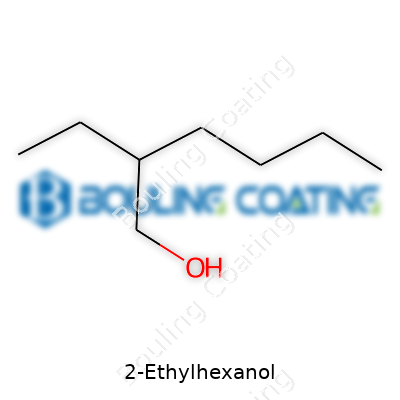
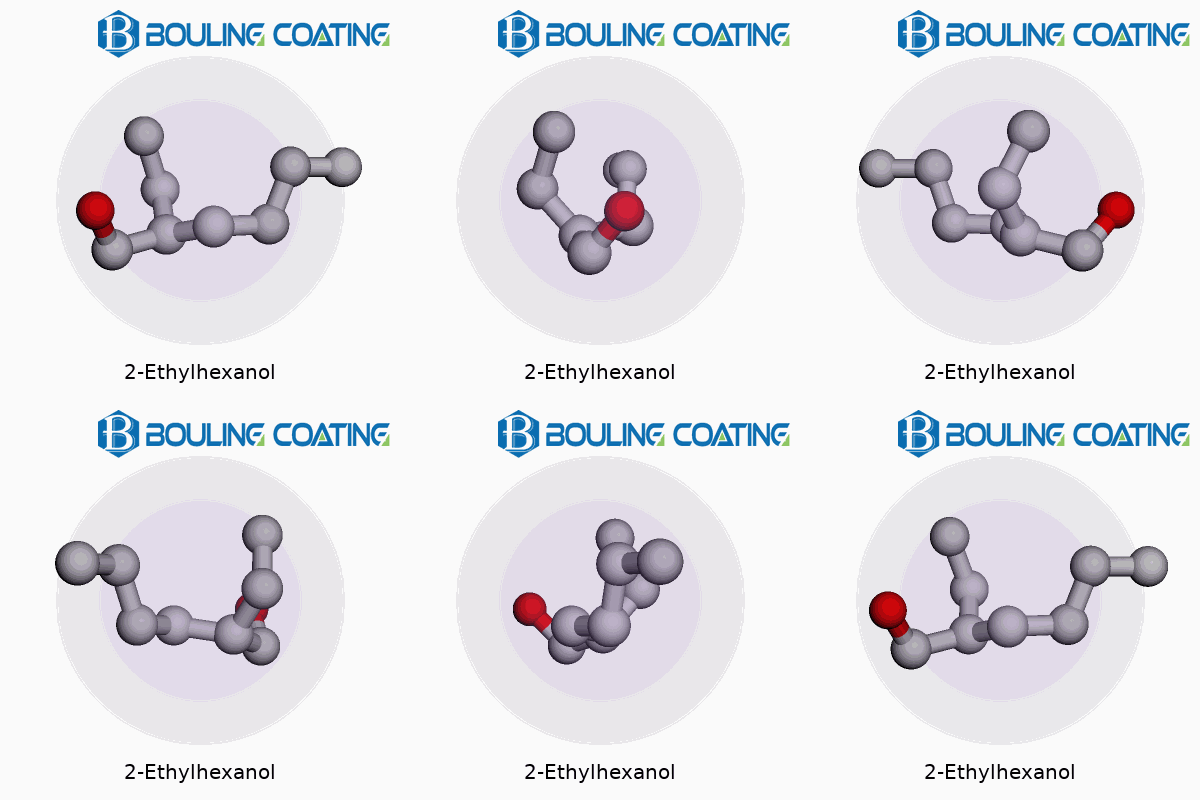
| Names | |
| Preferred IUPAC name | 2-ethylhexan-1-ol |
| Other names |
2-Ethylhexan-1-ol
2-Ethylhexyl alcohol Isooctyl alcohol Isooctanol Octyl alcohol |
| Pronunciation | /ˌtuː ˌɛθ.əl ˈhɛk.sə.nɒl/ |
| Identifiers | |
| CAS Number | 104-76-7 |
| 3D model (JSmol) | CCCCC(CC)CO |
| Beilstein Reference | 1719280 |
| ChEBI | CHEBI:24078 |
| ChEMBL | CHEMBL3183620 |
| ChemSpider | 7365 |
| DrugBank | Not found in DrugBank |
| ECHA InfoCard | 100.003.234 |
| EC Number | 203-234-3 |
| KEGG | C02596 |
| MeSH | 2-Ethylhexanol |
| PubChem CID | 7720 |
| RTECS number | MP0350000 |
| UNII | XZV7TAA77P |
| UN number | 3082 |
| Properties | |
| Chemical formula | C8H18O |
| Molar mass | 130.23 g/mol |
| Appearance | Colorless liquid |
| Odor | mild, sweet, slightly floral odor |
| Density | 0.833 g/cm³ |
| Solubility in water | Slightly soluble (0.7 g/L at 20°C) |
| log P | 2.72 |
| Vapor pressure | 0.2 mmHg at 25 °C |
| Acidity (pKa) | 16.5 |
| Basicity (pKb) | 16.4 |
| Magnetic susceptibility (χ) | -7.46e-6 |
| Refractive index (nD) | 1.4318 |
| Viscosity | 8.9 mPa·s |
| Dipole moment | 1.7 D |
| Thermochemistry | |
| Std molar entropy (S⦵298) | 363.6 J/(mol·K) |
| Std enthalpy of formation (ΔfH⦵298) | -432.8 kJ/mol |
| Std enthalpy of combustion (ΔcH⦵298) | -5288.1 kJ/mol |
| Pharmacology | |
| ATC code | No ATC code |
| Hazards | |
| GHS labelling | GHS02, GHS07, GHS08, Danger, H226, H304, H315, H319, H335, P210, P233, P240, P241, P242, P243, P280, P301+P310, P303+P361+P353, P304+P340+P312, P305+P351+P338, P331, P403+P233, P405, P501 |
| Pictograms | GHS02, GHS07 |
| Signal word | Warning |
| Hazard statements | H312 Harmful in contact with skin; H315 Causes skin irritation; H319 Causes serious eye irritation; H335 May cause respiratory irritation. |
| Precautionary statements | P210 P261 P280 P302+P352 P304+P340 P305+P351+P338 P312 P332+P313 P337+P313 P362 P403+P233 P405 P501 |
| NFPA 704 (fire diamond) | 2-2-0 |
| Flash point | 73 °C (163 °F) |
| Autoignition temperature | 270 °C |
| Explosive limits | 0.9-5.7 vol% |
| Lethal dose or concentration | 3730 mg/kg (oral, rat) |
| LD50 (median dose) | 3730 mg/kg |
| NIOSH | NIOSH REL: TWA 50 ppm (270 mg/m3) [skin]; IDLH: 100 ppm |
| PEL (Permissible) | 100 ppm (540 mg/m3) |
| REL (Recommended) | TWA 50 ppm (270 mg/m3) [skin] |
| IDLH (Immediate danger) | 100 ppm |
| Related compounds | |
| Related compounds |
2-Ethylhexanoic acid
2-Ethylhexanal 2-Ethylhexyl acetate 2-Ethylhexyl acrylate 2-Ethylhexyl nitrate 2-Ethylhexyl salicylate Bis(2-ethylhexyl) phthalate 1-Octanol 2-Octanol |


